I Kept a Candle Burning for My Son for Twenty Years. Then He Knocked on Christmas Eve
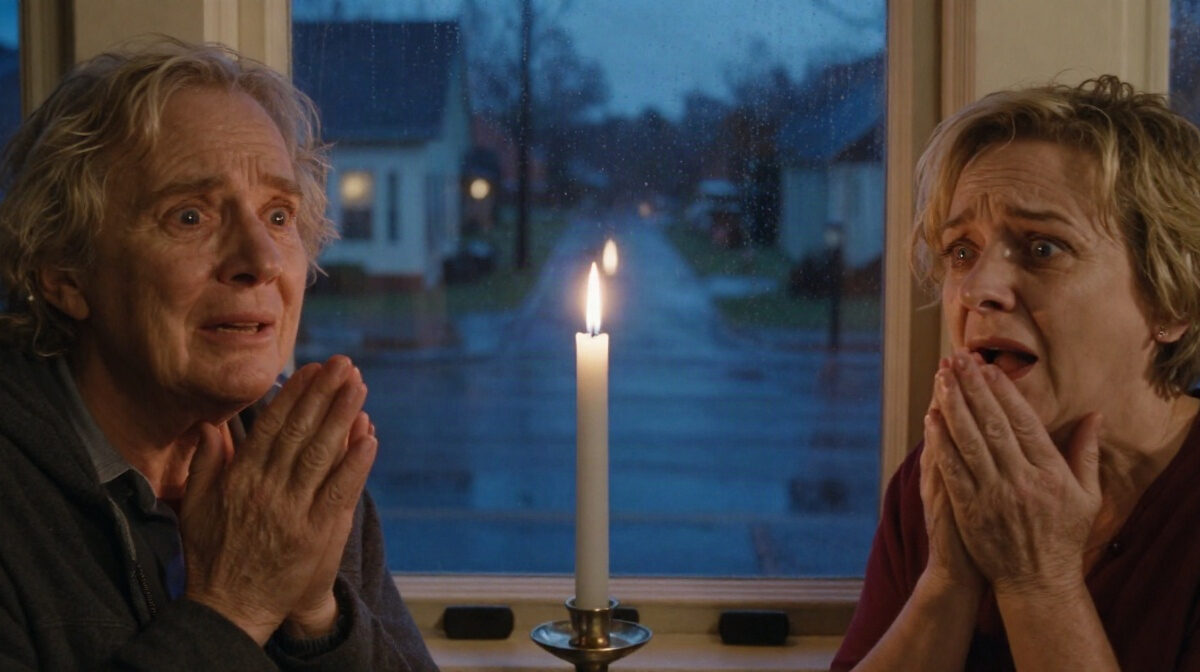
The candle went into the front window the same way it had for twenty Christmas Eves, the tall white church candle sitting in its tin holder, facing the street. I struck the match, cupped my hand around the flame, and watched it catch. Then I said the same short prayer I always said, the one that asks God to bring home whoever is out in the dark.
My son Ricardo left this house on October 14, 2006. He was twenty-six years old and had a temper like a struck match. His father, Ernesto, had heart trouble, and the medication cost more than we had. I had borrowed eighteen hundred dollars against the house to keep Ernesto’s pills coming.
When Ricardo found out, he shouted at me in the kitchen until the dishes rattled. Then he slammed the back door so hard the glass in the frame shook.
“You should have told me,” he said. “You should have let me handle it.”
“You were not able to handle it,” I told him. I wish now I had said it more gently. He drove to Austin that week. I wrote him a letter the following Christmas Eve, and every Christmas Eve after that. I did not ask him to come back. I only wanted him to know the door was not locked.
Dolores Hinojosa came across Lorraine Street at a quarter past seven with a foil pan of tamales. She has lived across from me since 1988, when she was a school secretary with a loud laugh and a car that never started in the cold. She still has the laugh, though the car is newer.
“Your candle is crooked,” she said, setting the pan on my counter.
“It is not crooked. It is leaning toward the street, which is where I want it.”
She shook her head at me, the way she has for eighteen years. We ate tamales at the kitchen table while the rain started. It began as a light tapping on the window, and by eight it was coming down hard, the kind of cold rain that makes the gutters sing. Dolores checked her phone and said the streets near the river were already going under water.
At nine-thirty someone knocked on the front door. It was not a polite knock. It was three quick raps, then a pause, then three more.
I opened the door with the chain still on. A man stood on the porch under the yellow light, his coat soaked black at the shoulders, his hair flat against his forehead. He was taller than I remembered, and thinner in the face, but I knew him the way you know a song from the first two notes.
“Ma’am,” he said. “I’m sorry. I need the hospital. Methodist Children’s. My daughter is there, and I’ve been driving in circles for an hour. Every road is closed.”
“Ricardo,” I said. I had not said his name out loud in a long time, and it came out smaller than I meant it to.
He looked at me then. I saw the shock cross his face, and under it something older, something he had kept folded up for twenty years. He opened his mouth, and nothing came out.
I slid the chain off the door. “Come in out of the rain before you fall down,” I said. “Tell me about your daughter while I find you a towel.”
He stepped into the front room and stopped beside the window, right beside the candle. The light lit the side of his face. He did not look at the flame. He looked at the floor.
“Lucía,” he said. “Her name is Lucía. She is nine. She got a fever this afternoon, and Marisa said it was her kidneys. Then the fever went higher. Marisa took her to the hospital, and I was supposed to follow them. I got turned around by the river.”
“Who is Marisa?” I asked, though I knew. A cousin had told me about the wedding in 2014, and I had sent a card to Austin that came back stamped returned.
“My wife. She’s a nursing assistant. She knows what she’s doing.” He wiped water off his face with his sleeve. “She’s the one who made me drive down here. I didn’t want to come.”
I brought him a towel from the hall closet. He took it with both hands, like a boy receiving something he is not sure he deserves.
“Sit down, mijo. Dolores will drive us. The roads are no good for your car.”
He did not sit down. He stood in my kitchen, dripping on the linoleum, looking at the rosary lying beside the sugar bowl, the wooden beads worn pale from my thumb.
“I didn’t come for you, Mamá,” he said quietly. “I came because I didn’t know where else to go.”
I reached for the rosary on the table and held it in my hand, and I did not answer him.