My Late Friend’s Nephew Handed Me a Page to Sign. The Hospital Slip Said Otherwise
Gordon Pratt held up the lined page like a winning ticket, and the room went quiet. Ruth Calloway looked at me over her glasses. I looked at the date.
“I found it in her desk drawer,” Gordon said. “Ada wrote this herself in February. She wanted me to have what was left of her life’s work.”
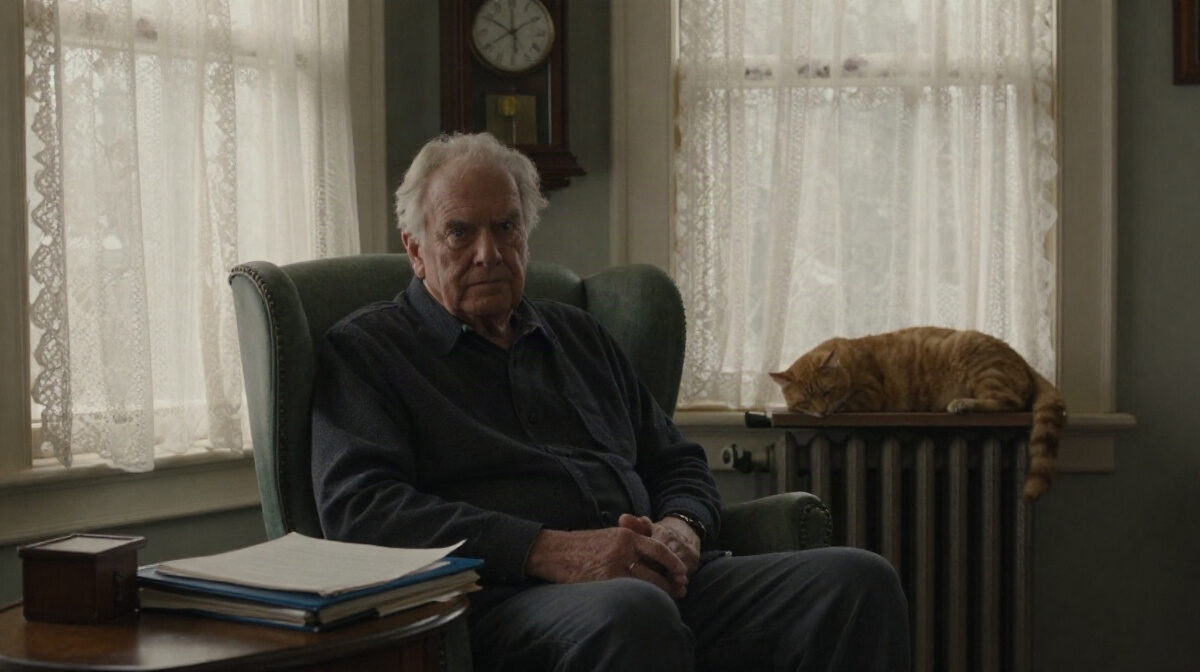
It was the Sunday after church, October 18, 2026. We were in Ada Whitcomb’s front parlor on Elliot Street, the one with the green wingback chair and the mantel clock that had stopped at 4:15 and never been fixed. Mister Tuck, her orange tabby, slept on the radiator like he owned the place.
I had come straight from the 10:30 service with a folder under my arm. I have carried a folder to nearly every important meeting for thirty years. Frank used to say I had more paper in my purse than the post office had in its back room.
Ada and I had been friends since I started as secretary at St. Mark’s in 1994. She taught piano for forty years and never once let a wrong note slide by. She was eighty-one when she died in March, and she was as sharp at the end as she had been at the start.
Pastor Lydia Brenner had come, and so had Ruth, who was the deacon and Ada’s next-door neighbor. Two other women from the visiting list sat on the piano bench, holding their purses on their knees.
Nathan Oakes, the notary, opened the reading the way he opens everything, slowly and by the book. He is a careful man with a steady voice. He put on his reading glasses and unfolded the will dated June 3, 2024.
“I, Ada Marie Whitcomb, leave sixty percent of my pension fund and savings to St. Mark’s Food Pantry,” he read. “The remaining forty percent I leave in equal shares to Ruth Calloway, Dorothy Hanley, and two women who sat with me when I could not sit alone.”
The total was $212,000. Ada had wanted it to feed families on Canal Street and to thank the women who had carried her groceries and her prescriptions in her last year.
Gordon Pratt laughed softly and waved his hand. He is fifty-two and has the easy grin of a man who has always been forgiven. His coat was good wool, and his shoes had been polished that morning.
“That will is old news,” he said. “Aunt Ada changed her mind. Here is the codicil. It leaves everything to me.”
He handed the page to Nathan. Nathan read it once, then again, and then he looked at me over the top of his glasses. I did not look away.
“Dorothy,” Gordon said, “you’re the one who keeps the books. You’ll see it’s in her hand. Would you sign as a witness? It’ll only take a minute.”
I looked at the lined paper, the blue rules running under the words. I looked at the date, February 2026, written in a style Ada had never used in her life.
I thought about four women and a food pantry losing money they had been promised. I thought about the cat bowl in Ada’s kitchen and the empty chair where she used to sit.
I took the pen Gordon offered and held it over the paper. Then I set it down on the table without signing.