My Son Had Written Me Every Birthday for 25 Years. The Estate Wanted Me to Sign Him Away
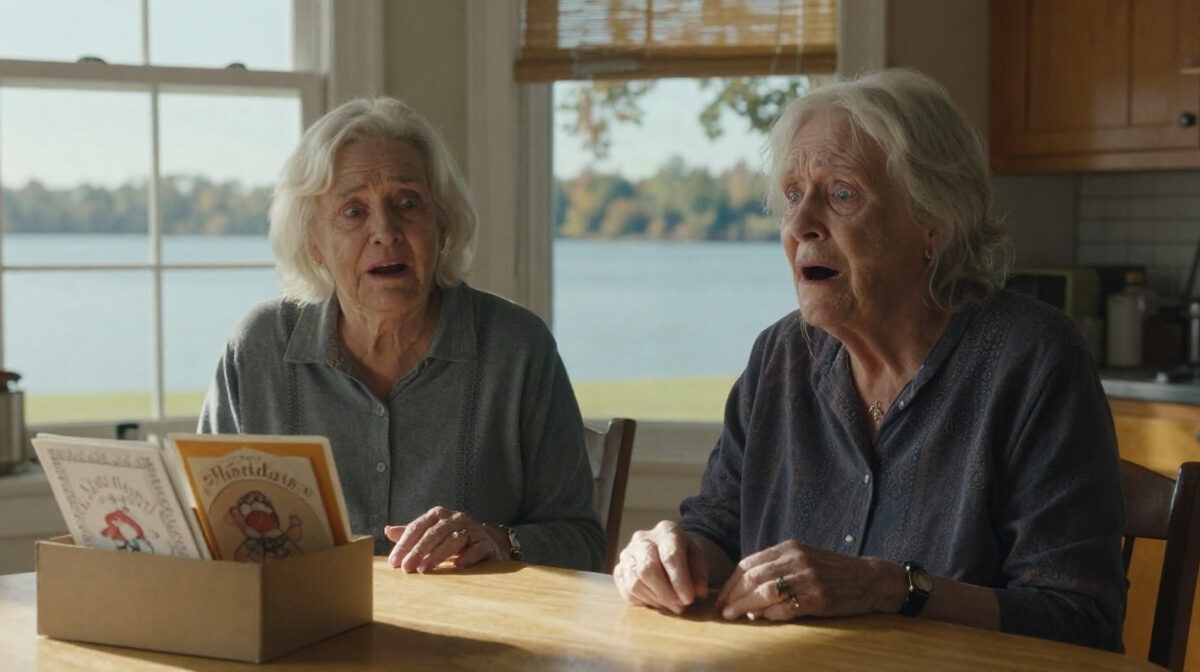
Marcy set the box on my kitchen table and did not sit down. Three weeks after Lyle’s funeral, it was the last thing I wanted in my house.
“They’re all for you, Greta,” she said. “Every one. I should have given them to you years ago.”
I lifted the lid. Inside were birthday cards, stacked by year, their envelopes still sealed. Every envelope had a Duluth postmark. Every card was signed with one word: Nathan.
“Who is Nathan?” I asked. My voice sounded far away to me.
Marcy pulled out a chair and finally sat. She had been my friend from church for nine years, and I had never once seen her look unsure.
“Your son,” she said. “The one you had at sixteen, at St. Luke’s, in March of 1975.”
I put my hand flat on the table. The clock over the stove ticked. Outside, the wind off the lake rattled the storm door the way it always did in October.
“Twenty-five years,” I said. “You have had these in a drawer for twenty-five years.”
“Since 2001, when the first one came,” Marcy said. “He asked the county to hold them. He agreed to a rule. He could write, but he could only reach you through a neutral worker, and only if you asked for it. You never asked, Greta. I kept them locked up because that was my job.”
“You could have told me he existed.”
“He asked only that you be told he existed,” Marcy said quietly. “That’s all I’m doing now. I thought, after Lyle, you deserved to know.”
I did not cry in front of her. I had not cried at Lyle’s funeral either, and people had thought me cold. I was not cold. I was only careful with my feelings, the way I had been careful with 31 years of hotel sheets on Superior Street.
Two days later a man in a gray suit came up my front walk on Piedmont Avenue. His name was Dennis Harwood. He carried a leather folder and a check already filled out for $250,000.
“My client wishes for you to be comfortable, Mrs. Lindqvist,” he said, sitting at my table without being asked. “A condominium is included in the proposal. A small house in the Lakeside area, if you prefer.”
“Who is your client?”
“I’m not at liberty to say. My client wants to make things right.”
“Make things right for who?”
He smiled the way men smile when they have said the same sentence in many kitchens. “For everyone, Mrs. Lindqvist. This is a confidential reconciliation. You would sign a release, and in return the matter is closed.”
I took the folder and turned to the last pages. Small print sat at the bottom of the release. In a footnote, in type I had to squint to read, was the name Walter Hanssen.
I had heard that name once, a long time ago. My mother used to say it when she was angry at the lawyers who handled things for our family.
“I’ll need a copy of everything,” I said. “And I’ll need to see the adoption file myself.”
Harwood’s smile thinned. He left the check on the table and said he would be back. I did not touch it.
That night I sat in the chair by the window with the first card in my lap. It read: “I hope you are well, and that you got the good chairs we always talked about.”
Inside the envelope there was a second card, older, the paper gone soft as cloth. My mother’s handwriting, in pencil, said only: “It is done. Do not speak of it.”