My Son-in-Law Drained My Late Wife’s Savings. The Proof Was in a Recipe Box
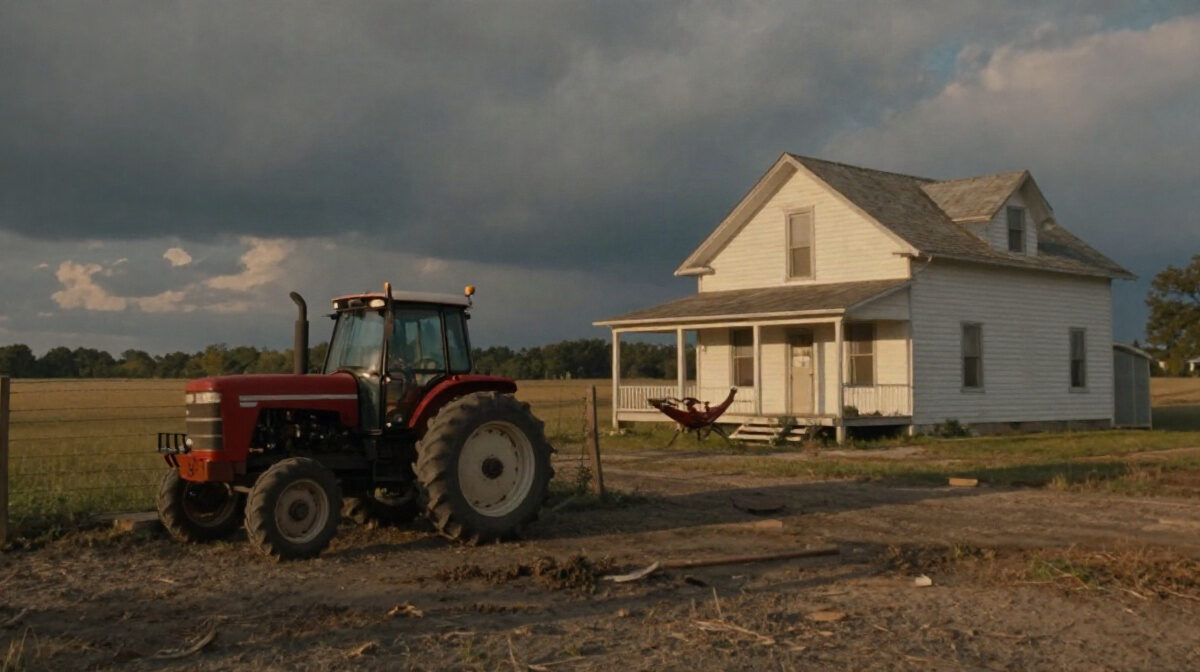
The north field was dry and dusty that last week of August, and I was on the tractor when Courtney’s little blue car came bumping up the gravel road. She didn’t wave. She parked by the fence and walked toward me with a folded paper in her hand, and I knew from the set of her shoulders that something was wrong.
I shut the engine off and climbed down. My knees let me know about it.
“Grandpa, the statements for the Harvest Fund stopped coming in the mail,” she said. “Not just this month. Since last fall.”
I wiped my hands on my jeans. The Harvest Fund was my wife Irene’s account. She opened it in 1989 with money from selling our hogs and the old grain bins, and she kept it going through every bad year we ever had. When she died in March of 2020, it came to me, about $212,000 in the bank.
“Derek said he had it handled,” I told her. “He’s Megan’s husband. He manages money for the land company. I signed some papers back in 2022 so he could take care of a repair bill for me, and he said he’d keep the rest of it steady.”
Courtney did not say anything for a moment. She is nineteen and a sophomore at the university in Columbia. She has always been the one who checks the arithmetic on the feed store receipts when everyone else is tired. She looked at the paper again.
“It’s a letter from the county bank,” she said. “They want you to come in for a meeting. And there’s something about a hearing at the courthouse in Osceola on August twenty-eighth. Grandpa, that’s about the farm.”
I felt the sun on the back of my neck and the dust in my throat. Three hundred and forty acres. My father’s plow marks are still under the north fence, and my grandfather bought the first two hundred acres in 1921. I had never once been asked to go to a courthouse about it.
“Let’s go to the house,” I said. “I want to see the old books.”
Courtney followed me up the porch steps. Inside, the kitchen smelled like the coffee I’d made at five that morning and forgotten. I pulled out the chairs at the table where Irene used to sit with her reading glasses and her pencil.
“Your grandmother kept the household money in a recipe box,” I said, and I felt a little foolish saying it. “She said a bank could lose the paper, but a tin box in the kitchen never would.”
I went to the cabinet over the stove and brought down the old tin recipe box, the one with the faded cherries painted on the lid. I set it on the table between us. Courtney watched me lift the lid, and neither of us breathed while I flipped past the cards for pie crust and chili.
In the very back, behind the last card, there was a small spiral notebook I had nearly forgotten. Irene wrote the household figures in ink. I had written the farm figures in pencil, because that was how my father taught me to keep a ledger, so a mistake could always be erased and fixed.
I turned the pages slowly. Here was the March 2020 date when Irene passed. Here was the tractor repair in 2022, and beside it I had written in my own careful hand, “Tractor only, $4,200.” I remembered the mechanic in Clinton and the new starter he put in the old Farmall.
Then my finger stopped on the next line down. I did not recognize the handwriting at all. It was square and hard, pressed deep into the paper, and it read, “Transfer to Lakeshore Land LLC, $60,000.”
Courtney leaned over my shoulder and read it out loud, very quietly. Outside, the wind picked up and rattled the screen door. The sky over the north field had turned a color I had only seen before the worst storms of my life.