My Brother Hid a Sister for Sixty-Five Years. Mama’s Diary Said Otherwise
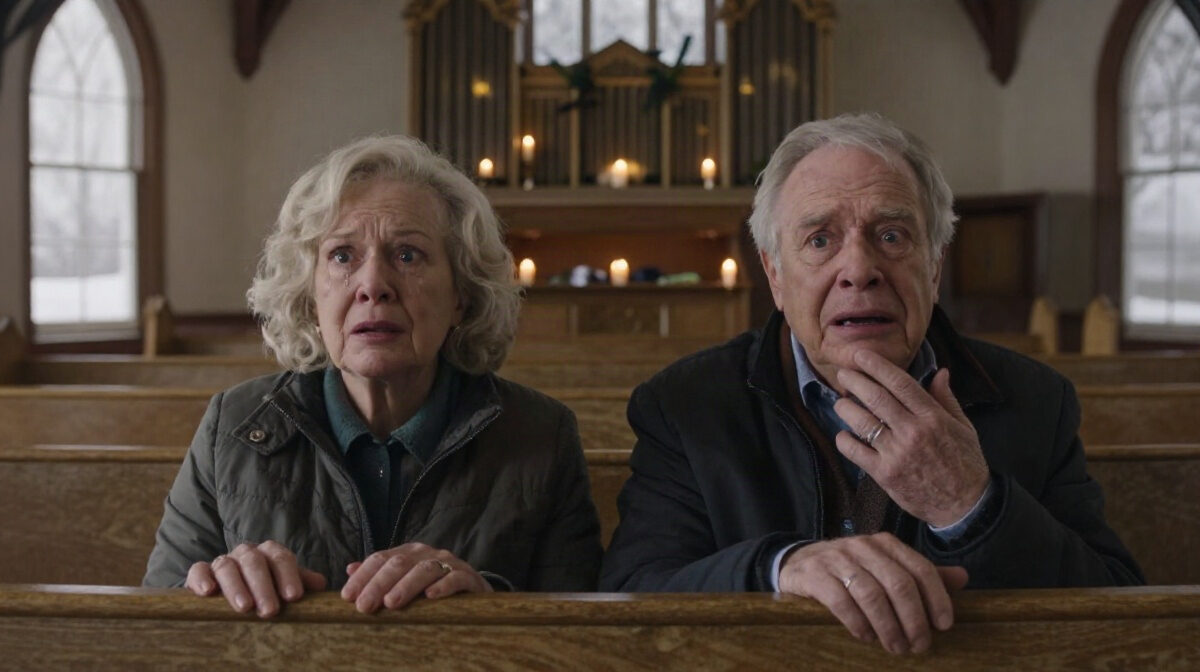
“She’s written to me twenty-six times, Lois.”
Stanley said it quietly, the way he might tell me the furnace filter needed changing. He slid the envelope back into his coat pocket and sat very still at his kitchen table on Hopkins Street, his big hands folded on the oilcloth. I had come over that afternoon with a green spiral notebook in my purse. I had set it down between us like a dish I did not want to drop.
It was the second week of October. I had gone down to the basement that morning to find the box marked CHRISTMAS in my mother’s handwriting, the one with the nativity figures wrapped in newspaper from 1971. Under the tangle of tinsel and the glass bulbs with their paint worn off, my fingers found something smooth and cool. It was Mama’s diary. I had never seen it before, but I knew it was hers. She always wrote the date in the top corner, neat and slanted, the way she wrote everything.
I had read it at the kitchen counter with my coffee going cold. Mama wrote about the early snow in 1958. She wrote about my father sitting in his chair with his boots still on. Then she wrote about March 9, when a baby girl was born at St. Joseph’s Hospital, with dark hair and a grip like a little fist. The next page said the baby was brought home to Hopkins Street in April and died in her crib that same month, the way the parish had been told.
But there was a line on a page in June that I read three times. “Taken to Ohio where she will have a better life. God forgive me, I signed the paper.”
I had been a schoolteacher for thirty-one years. I knew what a mother’s handwriting looked like when it was shaking.
“Stanley,” I said now, “was there a funeral?”
He looked at the diary and not at me. “There was a funeral. Closed casket. Father Lukas said the Mass himself.”
“Was there a baby in the casket?”
He did not answer that. He picked up the notebook, turned it over once, and set it down again. “Daddy made us promise, Lois. You were not even a year old. I was five. He sat me on the back steps and said, you don’t say a word to anybody, not to your mother’s friends, not to the priest. The parish would whisper about her for the rest of her life.”
“Us,” I said. “Who is us?”
“Me. And Mama.”
“Mama wrote it down,” I said. “She wrote it all down, and she never told me.”
Stanley finally looked at me. His eyes were wet and angry, and I had not seen him cry since Ed’s funeral. “She didn’t want you to know. None of us did.”
He put his hand flat on the oilcloth. Then he reached into his coat pocket again, and this time he did not take the envelope out. He only let me see the Dayton, Ohio postmark, the stamp still stuck crooked in the corner. I understood he had been carrying it around for weeks, waiting for me to ask the right question.
“Who is in Dayton, Stanley?”
He breathed in slowly. “I’ll tell you what I can. Not all of it. Not yet.”