My Brother Wanted to Sell Our Father’s Orchard. Then I Found Out Dad Had Another Family
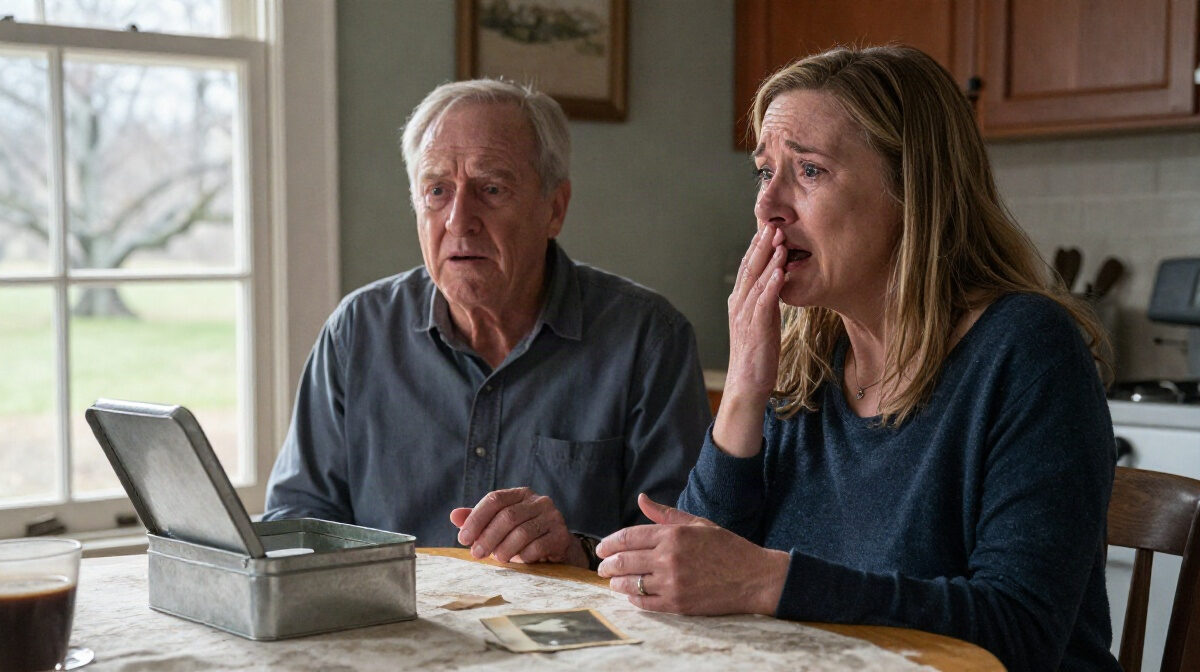
The Polaroid slid out from between two recipe cards when I lifted the lid of my mother’s tin. It was the color of weak tea, its edges soft from years of handling. A young man in a plaid shirt was laughing at something outside the frame, one hand raised as if to block the sun.
I turned it over. In my mother’s neat, slanted handwriting, someone had written: Hector — Dolores — Wenatchee — 1966.
It was February. My mother had been gone since January, and I was still finding her things in the wrong places. Her kitchen smelled like cinnamon and cold coffee, the way it always had.
I did not know the woman in the picture. She stood beside my father with her hair pinned up and her chin lifted. She was not quite smiling, like she was daring the camera to make something of it.
My brother Gil came in from the orchard truck while I was still holding it. He stamped the mud off his boots on the mat and looked at my face before he looked at the photo.
“Mom kept everything,” he said. “Receipts from 1971. Grocery lists. It doesn’t mean anything, Nora.”
“It says Hector on the back. In her handwriting.”
Gil pulled out a chair and sat down heavily. He rubbed the back of his neck the way Dad used to.
“Nora, listen. I’ve been talking to a developer. The land is worth more now than it’s ever been. They want Blue Ridge, all forty acres of it. Two million, maybe more.”
“You didn’t tell me.”
“I’m telling you now. I need the papers signed before spring. Dad’s been gone fifteen years, and Mom just died. We can’t keep working a place that eats money every year.”
I looked out the kitchen window at the rows of bare trees on the east bench. The Honeycrisp had been picked in September, and the leaves had gone the color of rust. My father had planted the first of those trees the year before I was born.
“I’m not signing anything until I know who she is,” I said.
We argued until the coffee went cold. Gil said I was sentimental. I said he was in a hurry, which is not the same as being right. In the end he threw up his hands and said I had until February, and then he would call the developer back himself.
I did not sleep that night. I sat at the kitchen table with the Polaroid under the lamp and a magnifier from Mom’s sewing box. Tucked in the back of the tin, behind a stack of church bulletins, was a small directory from First Lutheran in Wenatchee. Someone had penciled a phone number on the inside cover, with a name beside it: D. Varga.
I dialed it the next morning, standing in my own shop before the first customer came in. Nora’s Chair smelled of shampoo and hot combs, and the radio was playing low.
A woman picked up on the fourth ring. Her voice was steady and careful.
Before I could say a single word, she said, “Hector’s girl? Is that you?”