The Nephew Hid His Uncle’s Last Letter in a Desk Drawer for Two Years
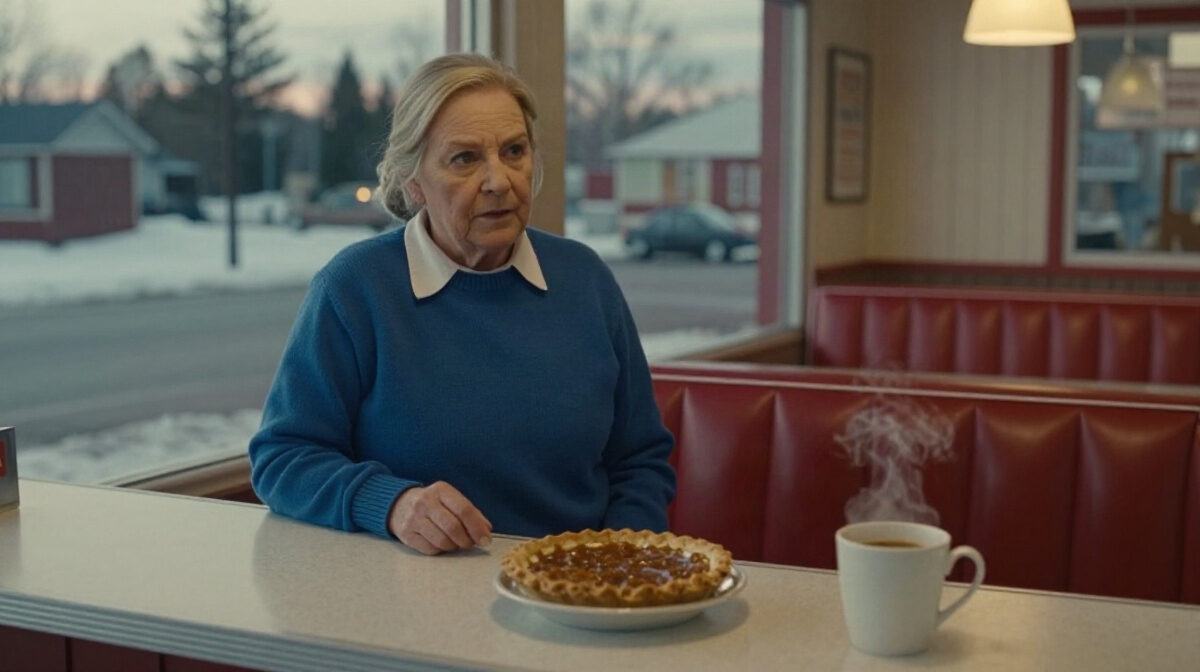
The lunch rush at the Blue Heron Diner had not let up since eleven, and by three o’clock my feet had given up asking for mercy. I was topping off a cup of coffee for a trucker when the bell over the door jingled and a man in a gray work coat stepped inside. He stood there a long moment, looking at the red vinyl booth by the window like it might be gone.
It was not him I noticed first. It was Ruby Dempsey, sitting alone in that same booth with her elbows on the table and her phone face down beside a cold glass of tea. She had been coming in on Tuesdays for months, always ordering the same thing, a turkey club with no tomato. Today she had ordered nothing at all.
“Ruby, honey, you want a slice of pie?” I asked, setting down the pot. “The pecan is from my sister’s recipe. It’s the last one in the case.”
She shook her head, then changed her mind. “Yes, ma’am. Please.”
I brought it with a fork and a napkin and sat down across from her for just a minute, which my manager would not have liked. Ruby stirred her tea and did not drink it.
“Daddy’s selling Uncle Hollis’s medal,” she said finally. “The Silver Star. He says the estate needs the money and nobody in the family wants it sitting on a shelf. He’s already called a man in Nashville who buys old militaria.”
“Did your uncle want it sold?” I asked.
“I don’t know. He never talked about it. Not once in my whole life. He’d just nod when somebody brought it up at Thanksgiving.” She pushed the pie crust around with her fork. “I keep thinking somebody should ask him, and then I remember he’s gone.”
I reached across and patted her hand. “Some things a man keeps to himself because he’s carrying them for everybody else. That doesn’t always mean he wanted them tossed in a pawn case.”
She looked up, and her eyes were wet and clear. “Thank you, Miss Joan. You always know what to say.”
I did not, really. I just listened, which is most of the job when you’ve waited tables as long as I have. Ruby ate half the slice before she stood to leave, tucking a five-dollar bill under the saucer.
The bell over the door jingled again, and I looked up from the register. It was the man from the window, and this time he came straight to the counter. He sat on the third stool, the one nobody ever sits on because it wobbles, and he set both hands flat on the Formica.
I knew that face the way you know the smell of your own kitchen. It was older now, lined around the eyes, but it was Walter Pruitt. I had not seen him since the spring of 1989, when I drove out of Harlan Creek with a packed car and a heart I had tried very hard to keep in one piece.
“Hello, Joan,” he said quietly.
“Walter,” I said. My voice came out smaller than I wanted. “You’re back in town.”
“Got in this morning. I wanted to see if the diner was still here.” He smiled a little. “Coffee, please. Black.”
I poured it with a hand that was not quite steady and set it in front of him. He wrapped his fingers around the mug the way he always used to, like it was the warmest thing in the room. Then he reached into the inside pocket of his coat and drew out a worn brown envelope, soft at the corners from years of handling.
He slid it across the counter toward me. “Hollis asked me to deliver this,” he said. “To the person who would know what to do with it.”
Before I could answer, headlights swept across the front window. Through the glass I saw a dark pickup swing hard into the lot, too fast for the snow-packed gravel, and stop crooked beside the curb.
Carl Dempsey was already climbing out of the cab.